The
medieval,
modern
and
contemporary
history
of
the
Roman
Catholics
in
Moldova
is
part
of
the
history
of
the
Romanian
people.
They,
Moldovan
Catholics,
identify with the experiences of Romanians over the centuries, with the aspirations, sufferings and achievements of the Romanian nation.
On
the
territory
of
the
historical
region
of
Moldova,
Christians
have
existed
since
the
first
centuries
of
the
spread
of
Christianity,
when
the
communities
that
developed here were under the jurisdiction of the Pope (Bishop of Rome).
After
the
great
schism,
the
presence
of
Roman
Catholics
in
the
historical
region
of
Moldova
is
attested
by
the
existence
and
functioning
of
ecclesiastical
structures
on
this
territory
as
follows:
Diocese
of
Milcov
(1227-1521),
Diocese
of
Siret
(1371-1434),
Diocese
of
Baia
(1418-1523),
the
Bishopric
of
Bacău
(1391-1392)
and
(1607-1818),
the
Apostolic
Vicariate
of
Moldavia
(1818-1884),
the
Episcopate
of
Iași
(1884-present).
In
other
historical
periods,
the
existing
Roman
Catholic
communities
in
Moldova
were
under the jurisdiction of ecclesiastical structures in Transylvania, Italy, Poland, the Czech Republic or Hungary.
The
Milcov
Diocese
(Milcovia
Episcopate)
was
the
first
known
Catholic
diocese
in
Moldova,
being
located
-
most
likely
-
in
today's
area
of
Odobești
or
Focșani
and
which had in pastoral regions of Transylvania, Milcov area (Vrancea), area Siret and Cetatea Albă (on the Dniester, today in Ukraine).
In
1227,
the
Cuman
king,
his
suite
and
15,000
men
were
baptized
in
the
Milcov
river
by
the
Archbishop
of
Strigonius
together
with
the
bishops
Bartholomew
of
Pecs,
Wilhelm of Veszprem and Raynald of Alba-Iulia.
The
first
ruler
of
the
Milcovia
Episcopate
was
appointed
by
the
pope,
in
1227
Bishop
Theodoric
who
pastored
the
community
from
1227
to
1241
when
both
the
settlement and the diocese were destroyed by the Mongols, who burned the cathedral, and the bishop was killed, together with 90 monks.
Then
13
other
bishops
took
over
the
leadership
of
the
Milcovia
Diocese:
“Th.
cumanorum
humilis
minister”
?
-
1283;
Leo
?
-
1327;
Vitus
de
Monteferro,
chaplain
to
King
Carol
Robert
?
-
1332;
Thomas
Nympti,
Augustinian
monk
1347-1348;
Bernard
of
Mazovia,
Polish
Dominican
monk
1353-1357;
Albert
de
Usk,
Dominican
monk
?
-
1364;
Nicolae
de
Buda,
Augustinian
monk
1371-1375;
Gobelinus,
bishop
of
Alba-Iulia
-
1386;
Laurentiu
?
-
1396;
Emerich
Zechel
-
1431;
Grigore
Jaurini,
vicar
general
at
Strigoniu
1433-1462;
Mihai
Turon,
auxiliary
bishop
of
Strigoniu
-
1468-1493;
Paul
Ilsine,
parish
priest
of
Strigoniu
1501-1504;
Ladislaus
of
Ondola
?
-
1510;
Dumitru
-
1511;
Mihai 1512-1521.
According
to
Catholic
missionaries,
in
addition
to
the
heavy
economic
burdens
(huge
taxes
and
fees
paid
by
Transylvanian
Romanians),
which
led
Romanian
peasants
to
take
refuge
in
Moldova,
was
forced
military
service,
introduced
by
the
Austrian
authorities
aimed
at
annexing
Transylvania
and
Bucovina,
with
the
aim
of
increasing the army.
Living
on
this
territory,
the
Moldovan
Roman
Catholics
were
the
victims
of
the
struggles
between
the
great
powers,
they
fought
together
with
the
Orthodox
Romanians in wars for liberation, union and independence.
In
the
localities
with
exclusively
Roman
Catholic
population,
as
well
as
in
the
localities
where
Roman
Catholics
live
with
Orthodox
Romanians,
there
are
historical
monuments
builted
in
memory
of
those
who
sacrificed
their
lives
to
defend
the
country,
among
those
who
fell
in
debt
whose
name
is
inscribed
on
these
monuments,
there
are many Romanians of Roman Catholic religion, which proves that they (the so-called csangos) defended their country at the cost of their lives if necessary.
All this proves the attachment of Moldovan Catholics to the ideals of the Romanian people with whom they identified.
Throughout
history
there
have
been
numerous
attempts
to
present
historical
reality
in
a
way
that
is
convenient
to
forces
that
do
not
serve
the
national
interest,
these
attempts being answered by those who want the truth to be known and made public.
Evidence
of
the
struggle
and
sacrifice
of
Moldovan
Catholics
is
presented
in
the
scientific
works
dedicated
to
the
history
of
the
csangos
presented
on
the
site,
in
other
historical
works,
as
well
as
in
the
few
studies
below,
in
which
you
will
find
arguments
of
Roman
Catholic
origin,
evidence
of
their
coexistence.
these
lands
and
their
devotion
to the country.

The history of the so-called "csangos"
is the same as the history of the Romanian people.
The
results
of
DNA
tests
show
that
the
Roman
Catholics
from
Moldavia
are
descendants
of
the
Dacians,
the
main
genetic
contribution
in
the
genome
of
the
so-called
"csangos"
coming
from
the
population
that lived on the territory of Dacia, since the Neolithic.
From
the
DNA
tests
performed
by
the
Roman
Catholics
from
Moldavia,
it
results
that
their
genetic
structure
includes
-
mostly
-
genes
specific
to
the
Neolithic
populations,
belonging
to
the
Coțofeni
culture,
Petrești
culture,
Cucuteni
culture,
these
populations
being
ancestors of the Dacians.
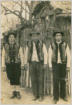
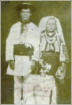
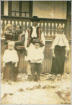
… over 800 years ago …
1900
1916
1958
1961
Present


Notes on the history of Roman Catholics in Moldavia
excerpts from the book Origin of the csangos from Moldavia - author Professor Dumitru Mărtinaș • Dimitrie Cantemir a consemnat despre catolicii din timpul său, că aceștia se declară catolici după neam și după religie. • În Divanul Ad-hoc al Moldovei, Mihail Kogălniceanu a apărat drepturile romano-catolicilor moldoveni respingând un proiect de lege care ar fi lăsat fără drepturi pe catolicii moldoveni. • Costache Negri a susținut drepturile catolicilor moldoveni afirmând că aceștia “ …împreună cu noi, de veacuri întregi, în toate zilele noastre de durere și amărăciune au tras și pătimit deopotrivă toate suferințele cu care a binevoit Domnul Dumnezeu a ne mustra, spre a ne aduce la înțelepciunea și dreptatea astăzi nouă trebuitoare… ” . • Încă de la 1234, într-o scrisoare papală se menționează că pe teritoriul episcopiei de Milcov, catolicii se amestecă cu valahii, trec la credința lor, făcându-se un popor cu ei . • Aceeași mențiune, privitor la trecerea catolicilor la religia ortodoxă, o face și arhiepiscopul Marco Bandini în raportul întocmit de acesta la Bacău, la data de 02 martie 1648, document în care erau notate constatările făcute prilejul vizitei efectuate de înaltul prelat în localitățile catolice din Moldova. • În anul 1763, episcopul de Bacău, Stanislau Jezierski a consemnat că “ …în toată Moldova numărul catolicilor nu sporește decât prin catolicii care vin din Transilvania… ” și deoarece acești “ …catolici transilvăneni aparțin stăpânirii ungurești… moldovenii nu-i numesc catolici ci unguri… ” . • Tot în anul 1763, Iosif Cambioli Prefectul Misiunii franciscane din Moldova, a consemnat “ …de șapte ani încoace, numărul catolicilor noștri a crescut și crește în fiecare zi, nu pentru că necatolicii ar trece la noi, ci pentru că în Ungaria și mai ales în Transilvania a fost și este foamete și acum, de când s-a încheiat pacea între austrieci și prusieni, prind soldați cu forța și de aceea în această provincie au venit și vin întruna familii întregi și mare număr de tineret de la 14 ani în sus, fiindcă de la această vârstă îi înrolează în armată… ”.
Politicians confirm and support the rights of Roman Catholics in Moldova
Roman Catholics in Moldavia, in 1848 • Dimitrie Cantemir noted about the Catholics of his time, that they declare themselves Catholics by nation and by religion. • In the Ad-hoc Divan of Moldova, Mihail Kogălniceanu defended the rights of Moldovan Roman Catholics by rejecting a bill that would have left Moldovan Catholics without rights. • Costache Negri supported the rights of Moldovan Catholics by stating that they “ …together with us, for centuries, in all our days of pain and bitterness have drawn and suffered both all the sufferings with which God willing to rebuke us, to bring us to the wisdom and justice we need today… ”. • As early as 1234, a papal letter mentions that on the territory of the diocese of Milcov, Catholics mingled with the Wallachians, converted to their faith, becoming a people with them. • The same mention, regarding the transition of Catholics to the Orthodox religion, is made by Archbishop Marco Bandini in the report prepared by him in Bacau, on March 2, 1648, a document in which were noted the findings made during the visit of the high prelate to Catholic localities in Moldova. • In 1763, the Bishop of Bacău, Stanislau Jezierski noted that “ … throughout Moldova the number of Catholics increases only through Catholics coming from Transylvania…” and because these “… Transylvanian Catholics belong to the Hungarian rule… Moldovans do not call them Catholics but Hungarians… ”. • Also in 1763, Iosif Cambioli, Prefect of the Franciscan Mission in Moldova, recorded “ … for seven years now, the number of our Catholics has increased and increases every day, not because non-Catholics would come to us, but because in Hungary even more elected in Transylvania was and is starving and now, since the peace between the Austrians and the Prussians ended, they catch soldiers by force and that is why whole families and a large number of young people from 14 years onwards have come and come in this province, because from this age he enlisted in the army… ”. Mihail Kogălniceanu and the political rights of Roman Catholics in Moldova (for details, read the document… here>>> )
SECRET SERVICES
about Roman Catholics in Moldavia
Sometimes, during turbulent historical periods, during the war or when foreign agents were operating on Romanian territory in the areas inhabited by Roman Catholics in Moldova (the so-called “csangos”), the Romanian secret services supervised the activities carried out in the area. The conclusion of the Romanian secret services has always been the same: - Roman Catholics in Moldova declare themselves Romanians, are loyal to the Romanian state and do not pose a danger to national security . A good example is the period before the First World War, when the Hungarian authorities planned to attract the "csangos" in the anti-Romanian policy. In April 1914, just four months before the outbreak of World War I, the journalist Fenyes László wrote articles in the Az Est newspapers in Budapest, the Neue Frei Presse in Austria, the Berliner Tageblat in Germany, L'Eclaire in France, and the Daily Chronic in London, arrived in Romania for "documentation". This journalist was actually an agent of the Hungarian secret services and visited several villages inhabited by Roman Catholics, in the region of Moldova (Romania), being pursued by State Security agents. The journalist Fenyes László left the area disappointed, after all the “csangos” firmly stated: “ … we are Romanians… ”, and a Roman Catholic priest even warned him that he would hand him over to State Security, after the journalist Fenyes László tried to get him to cooperate. Regarding the Romanian citizens of Roman Catholic religion, the reports prepared by the State Security agents who supervised László Fenyes, conclude that the so- called “csangos” consider themselves Romanians and are loyal to the Romanian state. SEE SOURCE >>> Read the full article about the failed attempt to attract the "csangos" in the service of the Hungarian state and about their response.
THE GOVERNMENT OF ROMANIA
confirms that Roman Catholics in Moldova are Romanians
Roman Catholics in Moldova during the military dictatorship (1940-1944) Even before the establishment of the military dictatorship in Romania, Moldovan Roman Catholics were accused of being of Hungarian origin, being called "Hungarians", "csangos", "boangins" and considered foreigners and enemies of the country. These accusations against Roman Catholics - sometimes even by public authorities - led Bishop Mihai Robu to address a memorial to Marshal Ion Antonescu on March 6, 1943, in which he denounced the campaign of slander and persecution of Catholics in Moldova, asked the marshal to analyze the situation and take corrective action, arguing that Roman Catholics are peaceful citizens and do their duty to the country like their Orthodox brethren: they pay taxes, pay taxes, join the army, listen to their superiors, they do not have feelings hostile to the country, they do not know another country than their Romanian Country, they all feel Romanian and are proud to be Romanians, and it hurts their heart that they are considered foreigners or Hungarians only because they are Catholics. The letter of Bishop Mihai Robu was analyzed in the meeting of the Council of Ministers on March 17, 1943, when the position of the Romanian Government towards the Roman Catholic Church was reiterated. In the decision, the government fully appropriated the issues reported by the bishop of Iasi and decided to launch an investigation on this "serious issue", deciding to punish all officials involved, the Romanian Government concluding that the Catholic population in Moldova is of Romanian origin and therefore , is wrongly considered to be of Hungarian (csangos) origin (...) and cannot be considered foreign by our people ... ". In a letter to Bishop Mihai Robu on March 18, 1943, the Vice President of the Council of Ministers, Professor Mihai Antonescu, stated: "Regarding in particular the situation of the Catholic population in Moldova, which is of Romanian origin, denationalized and mistaken for of Hungarian origin (csangos), I instructed both the Minister of Justice and the Minister of the Interior to show all prefectures and local government bodies that these populations cannot be considered foreign by our people and with much less to practice improper means against them. " This letter was sent by Bishop Mihai Robu, on April 3, 1943, to all parish priests in Moldova. Optimistically, the bishop called for Catholic believers to be informed that the Romanian government had respected the Catholic faith and that " Romanian ethnic origin is recognized by all Catholics in Moldova ." Although the memorandum of Bishop Mihai Robu, analyzed at the meeting of the Council of Ministers on March 17, 1943, received a favorable response, and the Antonescu Government decided to launch an investigation into this "serious issue" and punish all officials involved in such phenomena of "defaming Catholics. , the situation has not improved. Some priests resumed reporting violations of Catholic rights, prompting Bishop Robu to address the prime minister on May 14, June 5, July 13 and August 3, 1943. In his memoirs, the bishop of Iasi called for the Romanian government to comply with the March 17, 1943 ruling, punishing officials guilty of sabotaging the ruling, who began issuing "csango ethnic certificates," causing confusion and unrest among Catholic believers. In the last letter addressed to the Prime Minister, on August 3, 1943, Bishop Mihai Robu requested that the certificates issued to the "ethnic group of denationalized Romanians" not mention the name "csango", because it is arbitrary, has no historical basis and it is equivocal, which can lead to the "denial of the rights of Romanian Catholics." After these interventions, the problems reported by Bishop Mihai Robu seemed to be officially resolved, but there were still some local abuses. See sources http://www.ercis.ro/lumina/numar.asp?an=2002&numar=2&id=30 http://www.ercis.ro/lumina/numar.asp?an=2002&numar=3&id=52
Moldovan Roman Catholics
killed in the battles for the defense of the country
The first Romanian hero killed in the War of Independence from 1877-1878 was the soldier Andrei Lupu from the 8th Calarasi Regiment, a Roman Catholic from Luizi Calalugara, Bacau County. He was fatally shot on August 13, 1877, while patrolling in the outpost, south of the Danube, between Riben and Calișovaț (according to records in the archives of the Ministry of Defense). During the First World War, more than 12,000 Roman Catholics from the Diocese of Iaşi were called to arms. More than half of those enlisted was killed into debt and never returned to their homes. In memory of the Roman Catholic heroes of Moldova, in the localities with Roman Catholic communities, monuments were built in cemeteries, near churches or in public places, on these monuments being inscribed the names of the Roman Catholic heroes who gave their lives for the country, along with the names of other heroes of the Orthodox religion or another religion. In some localities, where Roman Catholics live with Orthodox believers, these monuments built in memory of the heroes were built in the care of Orthodox churches and are located in public places or in cemeteries belonging to Orthodox communities. Heroes from Horgești commune - Bacău County, killed in the battles for the defense of the country. For the heroes of the two world wars, inhabitants of the village of Horgești, a monument cross was built which is in the Orthodox cemetery. On this monument cross are mentioned the names of 90 heroes (63 killed in World War I and 27 killed in World War II). Of the heroes whose name is mentioned on this monument cross, 49 are Roman Catholics. See source and details - http://www.ercis.ro/actualitate/viata.asp?id=201804020 Images with the crucifix from Horgești commune Heroes from Mărgineni commune - Bacău County, killed in the battles for the defense of the country. In the village of Margineni, in 2009, a monument was builded in memory of the heroes of the first and second world war. On this monument are engraved, on three marble plates (placed next to each other), the names of 103 heroes of World War I and, on three other marble plates (applied one after the other, but on another side), the name of 99 of World War II heroes. See source and details - http://www.ercis.ro/actualitate/viata.asp?id=201808064 Images with the monument in the commune Mărgineni Heroes from Faraoani commune - Bacău County, killed in the battles for the defense of the country. In the village of Faraoani, in the immediate vicinity of the church, there is a monument of heroes built in 1927 and restored in 1985, in the form of a cross obelisk, seated on a pedestal that rests on a two-step post. On the back side of the monument are mentioned the name of a hero who fell in the war of 1877, the name of a hero who fell in the war of 1913, and the name of 14 heroes who fell in the war of 1916-1918. See source and details - http://www.ercis.ro/actualitate/viata.asp?id=201808025 Images with the monument in the commune Faraoani Heroes from Chetriș village - Bacău County, killed in the battles for the defense of the country. Chetriș village is part of Tamași commune, Bacău county and in the middle of the village was built a monument in 1941-1942, which was rehabilitated in 2008. The monument has an obelisk shaped like black marble, at the top there is a white marble cross and at the top of the obelisk there is an eagle. On the obelisk are noted the names of 30 heroes, who killed in the wars of 1877-1878, 1916-1918 and 1941 1945. Of the heroes mentioned, 13 are Roman Catholics. Vezi sursa și amănunte - http://www.ercis.ro/actualitate/viata.asp?id=201805054 Images with the monument in the village Chetriș Heroes from Tămășeni commune - Neamț County, killed in the battles for the defense of the country. In the village of Tămășeni in Neamț county, near the Roman-Catholic church, there is a monument built in 1998, on which are mentioned the Roman-Catholic heroes from the locality, who killed on duty in the two world wars. See source and details - http://www.ercis.ro/actualitate/viata.asp?id=201810169 Images with the monument in the village Tămășeni Heroes from Butea commune - Iași County, killed in the battles for the defense of the country. In the Butea locality of Iași county, in the courtyard of the Roman-Catholic church, there is a monument, mentioned by 92 Roman-Catholic heroes from the locality, who killed on duty in the First World War. See source and details - http://www.ercis.ro/actualitate/viata.asp?id=201804019 Images with the monument in the village Butea Heroes from Hălăucești commune - Iași County, killed in the battles for the defense of the country. In the locality of Hălăucești in Iași county, near the Roman Catholic church, there is a monument, consecrated in 1920, mentioned by 78 Roman-Catholic heroes from the locality, killed on duty in the first world war and one killed on duty in the year 1913. See source and details - http://www.ercis.ro/actualitate/viata.asp?id=201806091 Images with the monument in the village Hălăucești Here are mentioned some of the localities in which there are Roman-Catholic communities and where monuments were built in memory of the heroes killed in the battles for the defense of the homeland, but the number of these localities is much higher.

C O N T A C T S
We can be contacted at the e-mail address, on the forum and on facebook.History of Roman Catholics from Moldavia
(the so-called "csangos")
The
history
of
Roman
Catholics
from
Moldova
can
be
highlighted
until
antiquity
(5,000
years
ago)
and
even
in
prehistory
(more
than
5,000
years
ago),
based
on
genetic
tests
it
is
possible
to
prove
the
genetic
relationship
of
the
so-called
“csangos”
with
Romanians,
Bulgarians,
Serbs,
Hungarians,
Croats,
Slovenes,
Montenegrins,
Bosniaks,
Macedonians
and
Moldovans,
all
of
these
peoples having common ancestors until the Stone Age
(see ACKNOWLEDGMENT page)
.
ROMAN CATHOLICS IN MOLDOVA DURING THE COMMUNIST REGIME
The anti-communist resistance of the Roman Catholics in Moldova
The anti-communist resistance in Romania has been active since 1944 and lasted for more than 30 years, with some isolated groups effectively subsisting until 1976. The same cannot be said of the resistance by faith of Moldovan Catholics, as some Christians they did not like the ideas of the communist regime, despite the persecutions and deprivations to which they were subjected. There were clergy and laity who resisted to the death and did not obey the provisions given by the Communist Securitate, infiltrated in all structures of the Church, in schools, in enterprises, etc.. As a whole, religious cults could only be enemies of communist doctrine, because they represented "opium for the people" (Marx). As to how this incompatibility between religion and communist ideology manifested itself, there were notable differences between cults. The reaction of the Securitate was terrible, in the years of the institutionalization of the communist regime being arrested, tortured and sentenced to hard years in prison most of the Catholic priests from Moldova, who belonged to the Roman Catholic Diocese of Iasi. They were imprisoned in many of the more than 100 places of communist detention, where, in appalling conditions, anti-communist priests were serving sentences that could lead to forced labor for life. The Bishop of Iasi, Anton Durcovici, also died in Sighet Penitentiary on December 10, 1951, but many other Moldovan priests were imprisoned there. Others went through the Pitesti prison, where they were subjected to "re-education" through permanent torture, a unique "experiment" through his horror and the Danube-Black Sea canal, a construction started by Stalin's order, meant forced labor in conditions of extermination for dozens of priests arrested between 1948 and 1953. Jilava, Aiud, Gherla, Râmnicu Sărat, Târgu Ocna, Suceava, Botoşani etc. they held other penitentiaries where many Moldovan Catholic priests and laity suffered. All the anti-communist actions of Moldovan Catholics prove that, despite the atheist propaganda and terror that martyred the Romanian people for 45 years, Catholic priests, monks and lay people in the Diocese of Iasi have not stopped hating the regime, even if some of them they mimicked, out of fear, the attachment to communism. With the full establishment of the communist regime in 1948, and the unilateral denunciation of the Concordat with the Vatican by the same regime, the Catholic Church was subjected to severe censorship and church structures were severely hit. In this very difficult situation, the Holy See intervened with special instructions, the jurisdiction of the diocese being entrusted to some deputy bishops, under the name of "ordinarius substitutus". Thus, from the day of the arrest of Bishop Anton Durcovici (June 26, 1949) and until May 25, 1950, the leadership of the Diocese of Iasi was provided by Bishop Marcu Glaser, who was allegedly poisoned by the Securitate. After his death, for half a year, the helm of the Diocese of Iaşi was entrusted, as "ordinarius substitutus", to Father Gheorghe Peţ, who was an episcopal counselor, dean and parish priest of Butea. On November 15, 1950, he was arrested and imprisoned. On the same day, the leadership of the Diocese of Iasi reverted to Father Wilhelm Clofanda, also as "ordinarius substitutus", fulfilling the mission until March 8, 1951, when he was arrested. After learning of the arrest of Father Clofanda, the responsibility of leading the Diocese of Iasi fell to Father Petru Pleşca, as "ordinarius substitutus", on March 11, 1951, he being recognized by the Ministry of Cults as deputy of the Bishop of Iasi. Monks and nuns working in Catholic parishes in Moldova were able to work only until August 1948, when communist authorities nationalized the assets of church institutions and closed seminaries and monasteries. Following those laws, the consecrated persons were forced to leave Romania or to give up this way of life. Challenging the decisions imposed by the Securitate or continuing to carry out clandestine activities, many bishops, priests, monks and nuns sacrificed themselves to keep the flame of the faith burning among the Catholic population and to pass it on to future generations. As early as the summer of 1944, immediately after the invasion of Soviet troops in Romania, small groups were formed, mainly supporters of royalty, who started the fight against the Russian invaders. As Soviet and domestic terror worsened, groups of "anti-Bolshevik fighters" multiplied, many of them taking refuge in the mountains. In some cases, even Moldovan Catholic priests have been involved in supporting them by sending weapons, food and clothing. As an example of heroism, we mention here the priest Dumitru Matei, who was caught, arrested and sentenced to death, being executed on February 21, 1951. Like this Catholic priest were arrested, investigated, judged and convicted not only those who they were directly opposed to the establishment of communism, purges from the army, collectivization or the introduction of communism in schools, but also their relatives, brothers, parents, sisters who helped them. If in the autumn of 1948 the communist regime forcibly abolished the Greek Catholic Church, in the spring of 1949 it passed to the suppression of the Roman Catholic Church. In Bacău and Roman counties there was a large Catholic community that the communist authorities intended to destroy, but the peasants remained steadfast in the faith and many set out with their priests on the road to Golgotha from the extermination prisons. In the face of the failure of communist activists to convince the population about the "benefits" of collectivizing agriculture, the Securitate has come to the conclusion that priests and teachers are guilty of counter-propaganda. On March 8, 1949, it started with the village of Fundu Răcăciuni, but the priest Carol Susan was defended by the peasants, the aggressor activists were beaten, their car was overturned and their tires were cut with axes. Two days later, Security troops surrounded the village, and the peasants were forced, under the threat of machine guns, to retreat inside and around the church. Priest Susan, warned in advance, had fled with a few villagers and later surrendered. The peasants in the village began to be investigated on the spot, terrorized, sorted and arrested. The investigation continued in the following days. The women were brought from the forest and tied up in the church transformed into a dungeon. The teacher of the village, Anton Benchea, at the same time a singer at the church, was tortured and mocked in front of his wife and nine children, then he was shot. On March 15, 1949, the Securitate stormed the villages of Faraoani and Valea Mare. Singer Ioan Farcaş was thrown from the bell tower while sounding the alarm. Activists and security guards used the same methods of intimidation. Priests, teachers, notaries, and wealthy peasants, whom they improperly called "chiaburi," were targeted. The priests Ion Butnaru, Anton Dămoc, Petru Dâncă and Anton Olaru were arrested, together with the Christians who were leaving the service. They were beaten, humiliated, bound and thrown into the snow. A believer shouted, “Let us not leave them, brethren! We also give our lives for priests! ” A security officer pulled out his pistol and shot him on the spot. In the evening, the detainees were loaded into trucks and taken to the Security. Eight villagers died in agony. The communes of Luizi-Călugăra and Sărata followed, where the priests Gheorghe Pătraşcu and Petru Băcăoanu were arrested, together with a lot of parishioners. Blocking the road with logs, ambushes, forks and axes were not helpful. Security had sneaked agents into villages, and weapons could not be organized without weapons. Also useless was the spread of manifests multiplied with a typewriter by the teacher Vasile Ungureanu from Sagna commune, calling for the joining of forces against the common enemy. Priests Dumitru Lucaci and Gheorghe Patrascu were taken to Sighet. The others, many others, as well as the arrested Catholic peasants, were taken to Canal and Gherla, after being previously convicted by the Galati Military Tribunal. Moldovan Catholics, like all Romanian peasants, traditionally tied to the land they worked with sweat on their foreheads, were severely persecuted by the criminal collectivization of agriculture that began in 1949 and ended in the spring of 1962. Agricultural property was made by various means and in several stages. In the fight against "scoundrels" and "middlemen", the "poor" had to be "clarified" about the advantages of entering farms. Resistance was significant in the early years after the P.M.R. since March 1949, activists sent to the field have been rejected and expelled, and in many communes with Catholic peasants there have been open riots and fights with militia troops, which have resulted in deaths, injuries, convictions and deportations. However, most Moldovan Catholics opposed collectivization, sometimes vehemently and even violently. Against them, the communist regime unleashed a terrible repression, hundreds of Catholics being thrown in prisons or labor camps, and sometimes even killed. The economic repression against the peasantry was frightening, many of them deprived of the fruits of their labor and thus enduring a tragic poverty and famine. In addition to those who were killed then, others were arrested, criminally investigated and sentenced to severe punishments, and their families deported to Dobrogea, where some small Catholic communities were formed. In the Roman area, much was said and written about the revolt of the peasants from Butea and Sagna. The common pit and the crosses on Dealul Mărului are still a testimony today about what happened in the years 1949-1950. On an iron cross is written: "In memory of those executed without trial by the communists." In the autumn of 1990, Ioan Roşca, from the “Dialog” Association from Piatra Neamţ and Neculai Popa, from the Association of Former Political Prisoners - Neamţ, searched the grave and discovered 11 dead, victims of the Securitate. They were shot in 1950, when they were taken out of a car, lined up, dug a pit and killed. Eventually the executioners covered them with earth and left, believing that the secret would never be discovered. In the forest was then Tudor Gheorghe, the one who in 1990, at the age of 80, indicated the place. "I've been waiting for 40 years for someone to come and ask me ..." he said then. It was time, because I didn't have much to live for! ” The area was easy to remember, because after the executioners left, the peasant approached and carved a cross in the bark of the nearest tree, which grew with the tree. Then other crosses were carved. People around him knew and spoke in whispers. Crosses, coins issued by the Romanian People's Republic and other things that those killed wore around their necks or pockets were found in the pit. The 11 remained unknown, especially since the case submitted in 1990 to the Bacău Military Prosecutor's Office was closed by NUP (non- initiation of criminal prosecution) in 1994: as more than 15 years had passed since the commission of the deeds, the conclusion of the prescription was drawn. In the village of Butea, in August 1949, the inhabitants rose up against the communists when the communists wanted to arrest the priest Gheorghe Peţ. A plane flew over the village, which was soon surrounded by the army. Soldiers and militiamen armed to the teeth entered and were ordered to shoot: some were wounded, others beaten to death. Several were arrested in the following months; five families were deported, seven peasants were imprisoned and, after years, returned to the village. Along with them, studies show that over 40,000 people, mostly wealthy peasants, were deported to Bărăgan twice: in 1949 and 1951. The deportees were placed in a difficult geographical area. The localities where they were moved were called by the Security "special communes" and numbered 18. The deportees were allowed to return to their localities in 1955 and 1956, but many found their homes confiscated and given to other citizens. . A particularly widespread form of protest by Moldovan Catholics against the misery to which they were pushed was the refusal to go to work, with real agricultural strikes. At the same time, a phenomenon appeared and became widespread that would become common in the following decades: "theft" from Collective Farms or CAP, considered by peasants as a legitimate form of remuneration and redistribution of their income, but considered by the regime as a form of sabotage of socialist agriculture.


The
medieval,
modern
and
contemporary
history
of
the
Roman
Catholics
in
Moldova
is
part
of
the
history
of
the
Romanian
people.
They,
Moldovan
Catholics,
identify
with
the
experiences
of
Romanians
over the centuries, with the aspirations, sufferings and achievements of the Romanian nation.
On
the
territory
of
the
historical
region
of
Moldova,
Christians
have
existed
since
the
first
centuries
of
the
spread
of
Christianity,
when
the
communities
that
developed
here
were
under
the
jurisdiction
of
the Pope (Bishop of Rome).
After
the
great
schism,
the
presence
of
Roman
Catholics
in
the
historical
region
of
Moldova
is
attested
by
the
existence
and
functioning
of
ecclesiastical
structures
on
this
territory
as
follows:
Diocese
of
Milcov
(1227-1241),
Diocese
of
Siret
(1371-1434),
Diocese
of
Baia
(1418-1523),
the
Bishopric
of
Bacău
(1391-1392)
and
(1607-1818),
the
Apostolic
Vicariate
of
Moldavia
(1818-1884),
the
Episcopate
of
Iași
(1884-present).
In
other
historical
periods,
the
existing
Roman
Catholic
communities
in
Moldova
were
under
the
jurisdiction
of
ecclesiastical
structures
in
Transylvania,
Italy,
Poland,
the
Czech
Republic
or
Hungary.
The
Milcov
Diocese
(Milcovia
Episcopate)
was
the
first
known
Catholic
diocese
in
Moldova,
being
located
-
most
likely
-
in
today's
area
of
Odobești
or
Focșani
and
which
had
in
pastoral
regions
of
Transylvania, Milcov area (Vrancea), area Siret and Cetatea Albă (on the Dniester, today in Ukraine).
In
1227,
the
Cuman
king,
his
suite
and
15,000
men
were
baptized
in
the
Milcov
river
by
the
Archbishop
of
Strigonius
together
with
the
bishops
Bartholomew
of
Pecs,
Wilhelm
of
Veszprem
and
Raynald of Alba-Iulia.
The
first
ruler
of
the
Milcovia
Episcopate
was
appointed
by
the
pope,
in
1227
Bishop
Theodoric
who
pastored
the
community
from
1227
to
1241
when
both
the
settlement
and
the
diocese
were
destroyed
by
the Mongols, who burned the cathedral, and the bishop was killed, together with 90 monks.
Then
13
other
bishops
took
over
the
leadership
of
the
Milcovia
Diocese:
“Th.
cumanorum
humilis
minister”
?
-
1283;
Leo
?
-
1327;
Vitus
de
Monteferro,
chaplain
to
King
Carol
Robert
?
-
1332;
Thomas
Nympti,
Augustinian
monk
1347-1348;
Bernard
of
Mazovia,
Polish
Dominican
monk
1353-1357;
Albert
de
Usk,
Dominican
monk
?
-
1364;
Nicolae
de
Buda,
Augustinian
monk
1371-1375;
Gobelinus,
bishop
of
Alba-Iulia
?
-
1386;
Laurentiu
?
-
1396;
Emerich
Zechel
-
1431;
Grigore
Jaurini,
vicar
general
at
Strigoniu
1433-1462;
Mihai
Turon,
auxiliary
bishop
of
Strigoniu
1468-1493;
Paul
Ilsine,
parish
priest
of
Strigoniu 1501-1504; Ladislaus of Ondola ? - 1510; Dumitru - 1511; Mihai 1512-1521.
According
to
Catholic
missionaries,
in
addition
to
the
heavy
economic
burdens
(huge
taxes
and
fees
paid
by
Transylvanian
Romanians),
which
led
Romanian
peasants
to
take
refuge
in
Moldova,
was
forced
military
service,
introduced
by
the
Austrian
authorities
aimed
at
annexing
Transylvania
and
Bucovina,
with the aim of increasing the army.
Living
on
this
territory,
the
Moldovan
Roman
Catholics
were
the
victims
of
the
struggles
between
the
great
powers,
they
fought
together
with
the
Orthodox
Romanians
in
wars
for
liberation,
union
and
independence.
In
the
localities
with
exclusively
Roman
Catholic
population,
as
well
as
in
the
localities
where
Roman
Catholics
live
with
Orthodox
Romanians,
there
are
historical
monuments
builted
in
memory
of
those
who
sacrificed
their
lives
to
defend
the
country,
among
those
who
fell
in
debt
whose
name
is
inscribed
on
these
monuments,
there
are
many
Romanians
of
Roman
Catholic
religion,
which
proves
that they (the so-called csangos) defended their country at the cost of their lives if necessary.
All
this
proves
the
attachment
of
Moldovan
Catholics
to
the
ideals
of
the
Romanian
people
with
whom they identified.
Throughout
history
there
have
been
numerous
attempts
to
present
historical
reality
in
a
way
that
is
convenient
to
forces
that
do
not
serve
the
national
interest,
these
attempts
being
answered
by
those
who
want the truth to be known and made public.
Evidence
of
the
struggle
and
sacrifice
of
Moldovan
Catholics
is
presented
in
the
scientific
works
dedicated
to
the
history
of
the
csangos
presented
on
the
site,
in
other
historical
works,
as
well
as
in
the
few
studies
below,
in
which
you
will
find
arguments
of
Roman
Catholic
origin,
evidence
of
their
coexistence. these lands and their devotion to the country.
The history of the so-called "csangos"
is the same as the history of the Romanian people.
The
results
of
DNA
tests
show
that
the
Roman
Catholics
from
Moldavia
are
descendants
of
the
Dacians,
the
main
genetic
contribution
in
the
genome
of
the
so-called
"csangos"
coming
from
the
population
that
lived
on
the
territory
of
Dacia, since the Neolithic.
From
the
DNA
tests
performed
by
the
Roman
Catholics
from
Moldavia,
it
results
that
their
genetic
structure
includes
-
mostly
-
genes
specific
to
the
Neolithic
populations,
belonging
to
the
Coțofeni
culture,
Petrești
culture,
Cucuteni
culture, these populations being ancestors of the Dacians.
… over 800
years ago …
1900
1916
1958
1961
Present
Notes on the history of Roman Catholics in Moldavia
excerpts from the book Origin of the csangos from Moldavia - author Professor Dumitru Mărtinaș • Dimitrie Cantemir a consemnat despre catolicii din timpul său, că aceștia se declară catolici după neam și după religie. • În Divanul Ad-hoc al Moldovei, Mihail Kogălniceanu a apărat drepturile romano-catolicilor moldoveni respingând un proiect de lege care ar fi lăsat fără drepturi pe catolicii moldoveni. • Costache Negri a susținut drepturile catolicilor moldoveni afirmând că aceștia “ …împreună cu noi, de veacuri întregi, în toate zilele noastre de durere și amărăciune au tras și pătimit deopotrivă toate suferințele cu care a binevoit Domnul Dumnezeu a ne mustra, spre a ne aduce la înțelepciunea și dreptatea astăzi nouă trebuitoare… ” . • Încă de la 1234, într-o scrisoare papală se menționează că pe teritoriul episcopiei de Milcov, catolicii se amestecă cu valahii, trec la credința lor, făcându-se un popor cu ei . • Aceeași mențiune, privitor la trecerea catolicilor la religia ortodoxă, o face și arhiepiscopul Marco Bandini în raportul întocmit de acesta la Bacău, la data de 02 martie 1648, document în care erau notate constatările făcute prilejul vizitei efectuate de înaltul prelat în localitățile catolice din Moldova. • În anul 1763, episcopul de Bacău, Stanislau Jezierski a consemnat că “ …în toată Moldova numărul catolicilor nu sporește decât prin catolicii care vin din Transilvania… ” și deoarece acești “ …catolici transilvăneni aparțin stăpânirii ungurești… moldovenii nu-i numesc catolici ci unguri… ” . • Tot în anul 1763, Iosif Cambioli Prefectul Misiunii franciscane din Moldova, a consemnat “ …de șapte ani încoace, numărul catolicilor noștri a crescut și crește în fiecare zi, nu pentru că necatolicii ar trece la noi, ci pentru că în Ungaria și mai ales în Transilvania a fost și este foamete și acum, de când s-a încheiat pacea între austrieci și prusieni, prind soldați cu forța și de aceea în această provincie au venit și vin întruna familii întregi și mare număr de tineret de la 14 ani în sus, fiindcă de la această vârstă îi înrolează în armată… ”.
Politicians confirm and support the rights of Roman Catholics in Moldova
Roman Catholics in Moldavia, in 1848 • Dimitrie Cantemir noted about the Catholics of his time, that they declare themselves Catholics by nation and by religion. • In the Ad-hoc Divan of Moldova, Mihail Kogălniceanu defended the rights of Moldovan Roman Catholics by rejecting a bill that would have left Moldovan Catholics without rights. • Costache Negri supported the rights of Moldovan Catholics by stating that they “ …together with us, for centuries, in all our days of pain and bitterness have drawn and suffered both all the sufferings with which God willing to rebuke us, to bring us to the wisdom and justice we need today… ”. • As early as 1234, a papal letter mentions that on the territory of the diocese of Milcov, Catholics mingled with the Wallachians, converted to their faith, becoming a people with them. • The same mention, regarding the transition of Catholics to the Orthodox religion, is made by Archbishop Marco Bandini in the report prepared by him in Bacau, on March 2, 1648, a document in which were noted the findings made during the visit of the high prelate to Catholic localities in Moldova. • In 1763, the Bishop of Bacău, Stanislau Jezierski noted that “ … throughout Moldova the number of Catholics increases only through Catholics coming from Transylvania…” and because these “… Transylvanian Catholics belong to the Hungarian rule… Moldovans do not call them Catholics but Hungarians… ”. • Also in 1763, Iosif Cambioli, Prefect of the Franciscan Mission in Moldova, recorded “ … for seven years now, the number of our Catholics has increased and increases every day, not because non-Catholics would come to us, but because in Hungary even more elected in Transylvania was and is starving and now, since the peace between the Austrians and the Prussians ended, they catch soldiers by force and that is why whole families and a large number of young people from 14 years onwards have come and come in this province, because from this age he enlisted in the army… ”. Mihail Kogălniceanu and the political rights of Roman Catholics in Moldova (for details, read the document… here>>> )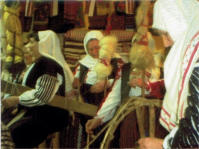
SECRET SERVICES
about Roman Catholics in Moldavia
Sometimes, during turbulent historical periods, during the war or when foreign agents were operating on Romanian territory in the areas inhabited by Roman Catholics in Moldova (the so-called “csangos”), the Romanian secret services supervised the activities carried out in the area. The conclusion of the Romanian secret services has always been the same: - Roman Catholics in Moldova declare themselves Romanians, are loyal to the Romanian state and do not pose a danger to national security . A good example is the period before the First World War, when the Hungarian authorities planned to attract the "csangos" in the anti-Romanian policy. In April 1914, just four months before the outbreak of World War I, the journalist Fenyes László wrote articles in the Az Est newspapers in Budapest, the Neue Frei Presse in Austria, the Berliner Tageblat in Germany, L'Eclaire in France, and the Daily Chronic in London, arrived in Romania for "documentation". This journalist was actually an agent of the Hungarian secret services and visited several villages inhabited by Roman Catholics, in the region of Moldova (Romania), being pursued by State Security agents. The journalist Fenyes László left the area disappointed, after all the “csangos” firmly stated: “ … we are Romanians… ”, and a Roman Catholic priest even warned him that he would hand him over to State Security, after the journalist Fenyes László tried to get him to cooperate. Regarding the Romanian citizens of Roman Catholic religion, the reports prepared by the State Security agents who supervised László Fenyes, conclude that the so-called “csangos” consider themselves Romanians and are loyal to the Romanian state. SEE SOURCE >>> Read the full article about the failed attempt to attract the "csangos" in the service of the Hungarian state and about their response.
THE GOVERNMENT OF ROMANIA
confirms that Roman Catholics in Moldova are Romanians
Roman Catholics in Moldova during the military dictatorship (1940-1944) Even before the establishment of the military dictatorship in Romania, Moldovan Roman Catholics were accused of being of Hungarian origin, being called "Hungarians", "csangos", "boangins" and considered foreigners and enemies of the country. These accusations against Roman Catholics - sometimes even by public authorities - led Bishop Mihai Robu to address a memorial to Marshal Ion Antonescu on March 6, 1943, in which he denounced the campaign of slander and persecution of Catholics in Moldova, asked the marshal to analyze the situation and take corrective action, arguing that Roman Catholics are peaceful citizens and do their duty to the country like their Orthodox brethren: they pay taxes, pay taxes, join the army, listen to their superiors, they do not have feelings hostile to the country, they do not know another country than their Romanian Country, they all feel Romanian and are proud to be Romanians, and it hurts their heart that they are considered foreigners or Hungarians only because they are Catholics. The letter of Bishop Mihai Robu was analyzed in the meeting of the Council of Ministers on March 17, 1943, when the position of the Romanian Government towards the Roman Catholic Church was reiterated. In the decision, the government fully appropriated the issues reported by the bishop of Iasi and decided to launch an investigation on this "serious issue", deciding to punish all officials involved, the Romanian Government concluding that the Catholic population in Moldova is of Romanian origin and therefore , is wrongly considered to be of Hungarian (csangos) origin (...) and cannot be considered foreign by our people ... ". In a letter to Bishop Mihai Robu on March 18, 1943, the Vice President of the Council of Ministers, Professor Mihai Antonescu, stated: "Regarding in particular the situation of the Catholic population in Moldova, which is of Romanian origin, denationalized and mistaken for of Hungarian origin (csangos), I instructed both the Minister of Justice and the Minister of the Interior to show all prefectures and local government bodies that these populations cannot be considered foreign by our people and with much less to practice improper means against them. " This letter was sent by Bishop Mihai Robu, on April 3, 1943, to all parish priests in Moldova. Optimistically, the bishop called for Catholic believers to be informed that the Romanian government had respected the Catholic faith and that " Romanian ethnic origin is recognized by all Catholics in Moldova ." Although the memorandum of Bishop Mihai Robu, analyzed at the meeting of the Council of Ministers on March 17, 1943, received a favorable response, and the Antonescu Government decided to launch an investigation into this "serious issue" and punish all officials involved in such phenomena of "defaming Catholics. , the situation has not improved. Some priests resumed reporting violations of Catholic rights, prompting Bishop Robu to address the prime minister on May 14, June 5, July 13 and August 3, 1943. In his memoirs, the bishop of Iasi called for the Romanian government to comply with the March 17, 1943 ruling, punishing officials guilty of sabotaging the ruling, who began issuing "csango ethnic certificates," causing confusion and unrest among Catholic believers. In the last letter addressed to the Prime Minister, on August 3, 1943, Bishop Mihai Robu requested that the certificates issued to the "ethnic group of denationalized Romanians" not mention the name "csango", because it is arbitrary, has no historical basis and it is equivocal, which can lead to the "denial of the rights of Romanian Catholics." After these interventions, the problems reported by Bishop Mihai Robu seemed to be officially resolved, but there were still some local abuses. See sources http://www.ercis.ro/lumina/numar.asp?an=2002&numar=2&id=30 http://www.ercis.ro/lumina/numar.asp?an=2002&numar=3&id=52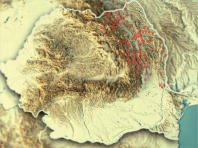
Moldovan Roman Catholics
killed in the battles for the defense of the country
The first Romanian hero killed in the War of Independence from 1877-1878 was the soldier Andrei Lupu from the 8th Calarasi Regiment, a Roman Catholic from Luizi Calalugara, Bacau County. He was fatally shot on August 13, 1877, while patrolling in the outpost, south of the Danube, between Riben and Calișovaț (according to records in the archives of the Ministry of Defense). During the First World War, more than 12,000 Roman Catholics from the Diocese of Iaşi were called to arms. More than half of those enlisted was killed into debt and never returned to their homes. In memory of the Roman Catholic heroes of Moldova, in the localities with Roman Catholic communities, monuments were built in cemeteries, near churches or in public places, on these monuments being inscribed the names of the Roman Catholic heroes who gave their lives for the country, along with the names of other heroes of the Orthodox religion or another religion. In some localities, where Roman Catholics live with Orthodox believers, these monuments built in memory of the heroes were built in the care of Orthodox churches and are located in public places or in cemeteries belonging to Orthodox communities. Heroes from Horgești commune - Bacău County, killed in the battles for the defense of the country. For the heroes of the two world wars, inhabitants of the village of Horgești, a monument cross was built which is in the Orthodox cemetery. On this monument cross are mentioned the names of 90 heroes (63 killed in World War I and 27 killed in World War II). Of the heroes whose name is mentioned on this monument cross, 49 are Roman Catholics. See source and details - http://www.ercis.ro/actualitate/viata.asp?id=201804020 Images with the crucifix from Horgești commune Heroes from Mărgineni commune - Bacău County, killed in the battles for the defense of the country. In the village of Margineni, in 2009, a monument was builded in memory of the heroes of the first and second world war. On this monument are engraved, on three marble plates (placed next to each other), the names of 103 heroes of World War I and, on three other marble plates (applied one after the other, but on another side), the name of 99 of World War II heroes. See source and details - http://www.ercis.ro/actualitate/viata.asp?id=201808064 Images with the monument in the commune Mărgineni Heroes from Faraoani commune - Bacău County, killed in the battles for the defense of the country. In the village of Faraoani, in the immediate vicinity of the church, there is a monument of heroes built in 1927 and restored in 1985, in the form of a cross obelisk, seated on a pedestal that rests on a two-step post. On the back side of the monument are mentioned the name of a hero who fell in the war of 1877, the name of a hero who fell in the war of 1913, and the name of 14 heroes who fell in the war of 1916-1918. See source and details - http://www.ercis.ro/actualitate/viata.asp?id=201808025 Images with the monument in the commune Faraoani Heroes from Chetriș village - Bacău County, killed in the battles for the defense of the country. Chetriș village is part of Tamași commune, Bacău county and in the middle of the village was built a monument in 1941-1942, which was rehabilitated in 2008. The monument has an obelisk shaped like black marble, at the top there is a white marble cross and at the top of the obelisk there is an eagle. On the obelisk are noted the names of 30 heroes, who killed in the wars of 1877-1878, 1916-1918 and 1941 1945. Of the heroes mentioned, 13 are Roman Catholics. Vezi sursa și amănunte - http://www.ercis.ro/actualitate/viata.asp?id=201805054 Images with the monument in the village Chetriș Heroes from Tămășeni commune - Neamț County, killed in the battles for the defense of the country. In the village of Tămășeni in Neamț county, near the Roman-Catholic church, there is a monument built in 1998, on which are mentioned the Roman-Catholic heroes from the locality, who killed on duty in the two world wars. See source and details - http://www.ercis.ro/actualitate/viata.asp?id=201810169 Images with the monument in the village Tămășeni Heroes from Butea commune - Iași County, killed in the battles for the defense of the country. In the Butea locality of Iași county, in the courtyard of the Roman-Catholic church, there is a monument, mentioned by 92 Roman-Catholic heroes from the locality, who killed on duty in the First World War. See source and details - http://www.ercis.ro/actualitate/viata.asp?id=201804019 Images with the monument in the village Butea Heroes from Hălăucești commune - Iași County, killed in the battles for the defense of the country. In the locality of Hălăucești in Iași county, near the Roman Catholic church, there is a monument, consecrated in 1920, mentioned by 78 Roman-Catholic heroes from the locality, killed on duty in the first world war and one killed on duty in the year 1913. See source and details - http://www.ercis.ro/actualitate/viata.asp?id=201806091 Images with the monument in the village Hălăucești Here are mentioned some of the localities in which there are Roman-Catholic communities and where monuments were built in memory of the heroes killed in the battles for the defense of the homeland, but the number of these localities is much higher.
C O N T A C T S
We can be contacted at the e-mail address, on the forum and on facebook.
History of Roman Catholics from Moldavia
(the so-called "csangos")
The
history
of
Roman
Catholics
from
Moldova
can
be
highlighted
until
antiquity
(5,000
years
ago)
and
even
in
prehistory
(more
than
5,000
years
ago),
based
on
genetic
tests
it
is
possible
to
prove
the
genetic
relationship
of
the
so-called
“csangos”
with
Romanians,
Bulgarians,
Serbs,
Hungarians,
Croats,
Slovenes,
Montenegrins,
Bosniaks,
Macedonians
and
Moldovans,
all
of
these
peoples
having
common
ancestors
until
the
Stone
Age
(see ACKNOWLEDGMENT page)
.
ROMAN CATHOLICS IN MOLDOVA DURING THE COMMUNIST REGIME
The anti-communist resistance of the Roman Catholics in Moldova
The anti-communist resistance in Romania has been active since 1944 and lasted for more than 30 years, with some isolated groups effectively subsisting until 1976. The same cannot be said of the resistance by faith of Moldovan Catholics, as some Christians they did not like the ideas of the communist regime, despite the persecutions and deprivations to which they were subjected. There were clergy and laity who resisted to the death and did not obey the provisions given by the Communist Securitate, infiltrated in all structures of the Church, in schools, in enterprises, etc.. As a whole, religious cults could only be enemies of communist doctrine, because they represented "opium for the people" (Marx). As to how this incompatibility between religion and communist ideology manifested itself, there were notable differences between cults. The reaction of the Securitate was terrible, in the years of the institutionalization of the communist regime being arrested, tortured and sentenced to hard years in prison most of the Catholic priests from Moldova, who belonged to the Roman Catholic Diocese of Iasi. They were imprisoned in many of the more than 100 places of communist detention, where, in appalling conditions, anti-communist priests were serving sentences that could lead to forced labor for life. The Bishop of Iasi, Anton Durcovici, also died in Sighet Penitentiary on December 10, 1951, but many other Moldovan priests were imprisoned there. Others went through the Pitesti prison, where they were subjected to "re-education" through permanent torture, a unique "experiment" through his horror and the Danube-Black Sea canal, a construction started by Stalin's order, meant forced labor in conditions of extermination for dozens of priests arrested between 1948 and 1953. Jilava, Aiud, Gherla, Râmnicu Sărat, Târgu Ocna, Suceava, Botoşani etc. they held other penitentiaries where many Moldovan Catholic priests and laity suffered. All the anti-communist actions of Moldovan Catholics prove that, despite the atheist propaganda and terror that martyred the Romanian people for 45 years, Catholic priests, monks and lay people in the Diocese of Iasi have not stopped hating the regime, even if some of them they mimicked, out of fear, the attachment to communism. With the full establishment of the communist regime in 1948, and the unilateral denunciation of the Concordat with the Vatican by the same regime, the Catholic Church was subjected to severe censorship and church structures were severely hit. In this very difficult situation, the Holy See intervened with special instructions, the jurisdiction of the diocese being entrusted to some deputy bishops, under the name of "ordinarius substitutus". Thus, from the day of the arrest of Bishop Anton Durcovici (June 26, 1949) and until May 25, 1950, the leadership of the Diocese of Iasi was provided by Bishop Marcu Glaser, who was allegedly poisoned by the Securitate. After his death, for half a year, the helm of the Diocese of Iaşi was entrusted, as "ordinarius substitutus", to Father Gheorghe Peţ, who was an episcopal counselor, dean and parish priest of Butea. On November 15, 1950, he was arrested and imprisoned. On the same day, the leadership of the Diocese of Iasi reverted to Father Wilhelm Clofanda, also as "ordinarius substitutus", fulfilling the mission until March 8, 1951, when he was arrested. After learning of the arrest of Father Clofanda, the responsibility of leading the Diocese of Iasi fell to Father Petru Pleşca, as "ordinarius substitutus", on March 11, 1951, he being recognized by the Ministry of Cults as deputy of the Bishop of Iasi. Monks and nuns working in Catholic parishes in Moldova were able to work only until August 1948, when communist authorities nationalized the assets of church institutions and closed seminaries and monasteries. Following those laws, the consecrated persons were forced to leave Romania or to give up this way of life. Challenging the decisions imposed by the Securitate or continuing to carry out clandestine activities, many bishops, priests, monks and nuns sacrificed themselves to keep the flame of the faith burning among the Catholic population and to pass it on to future generations. As early as the summer of 1944, immediately after the invasion of Soviet troops in Romania, small groups were formed, mainly supporters of royalty, who started the fight against the Russian invaders. As Soviet and domestic terror worsened, groups of "anti-Bolshevik fighters" multiplied, many of them taking refuge in the mountains. In some cases, even Moldovan Catholic priests have been involved in supporting them by sending weapons, food and clothing. As an example of heroism, we mention here the priest Dumitru Matei, who was caught, arrested and sentenced to death, being executed on February 21, 1951. Like this Catholic priest were arrested, investigated, judged and convicted not only those who they were directly opposed to the establishment of communism, purges from the army, collectivization or the introduction of communism in schools, but also their relatives, brothers, parents, sisters who helped them. If in the autumn of 1948 the communist regime forcibly abolished the Greek Catholic Church, in the spring of 1949 it passed to the suppression of the Roman Catholic Church. In Bacău and Roman counties there was a large Catholic community that the communist authorities intended to destroy, but the peasants remained steadfast in the faith and many set out with their priests on the road to Golgotha from the extermination prisons. In the face of the failure of communist activists to convince the population about the "benefits" of collectivizing agriculture, the Securitate has come to the conclusion that priests and teachers are guilty of counter-propaganda. On March 8, 1949, it started with the village of Fundu Răcăciuni, but the priest Carol Susan was defended by the peasants, the aggressor activists were beaten, their car was overturned and their tires were cut with axes. Two days later, Security troops surrounded the village, and the peasants were forced, under the threat of machine guns, to retreat inside and around the church. Priest Susan, warned in advance, had fled with a few villagers and later surrendered. The peasants in the village began to be investigated on the spot, terrorized, sorted and arrested. The investigation continued in the following days. The women were brought from the forest and tied up in the church transformed into a dungeon. The teacher of the village, Anton Benchea, at the same time a singer at the church, was tortured and mocked in front of his wife and nine children, then he was shot. On March 15, 1949, the Securitate stormed the villages of Faraoani and Valea Mare. Singer Ioan Farcaş was thrown from the bell tower while sounding the alarm. Activists and security guards used the same methods of intimidation. Priests, teachers, notaries, and wealthy peasants, whom they improperly called "chiaburi," were targeted. The priests Ion Butnaru, Anton Dămoc, Petru Dâncă and Anton Olaru were arrested, together with the Christians who were leaving the service. They were beaten, humiliated, bound and thrown into the snow. A believer shouted, “Let us not leave them, brethren! We also give our lives for priests! ” A security officer pulled out his pistol and shot him on the spot. In the evening, the detainees were loaded into trucks and taken to the Security. Eight villagers died in agony. The communes of Luizi-Călugăra and Sărata followed, where the priests Gheorghe Pătraşcu and Petru Băcăoanu were arrested, together with a lot of parishioners. Blocking the road with logs, ambushes, forks and axes were not helpful. Security had sneaked agents into villages, and weapons could not be organized without weapons. Also useless was the spread of manifests multiplied with a typewriter by the teacher Vasile Ungureanu from Sagna commune, calling for the joining of forces against the common enemy. Priests Dumitru Lucaci and Gheorghe Patrascu were taken to Sighet. The others, many others, as well as the arrested Catholic peasants, were taken to Canal and Gherla, after being previously convicted by the Galati Military Tribunal. Moldovan Catholics, like all Romanian peasants, traditionally tied to the land they worked with sweat on their foreheads, were severely persecuted by the criminal collectivization of agriculture that began in 1949 and ended in the spring of 1962. Agricultural property was made by various means and in several stages. In the fight against "scoundrels" and "middlemen", the "poor" had to be "clarified" about the advantages of entering farms. Resistance was significant in the early years after the P.M.R. since March 1949, activists sent to the field have been rejected and expelled, and in many communes with Catholic peasants there have been open riots and fights with militia troops, which have resulted in deaths, injuries, convictions and deportations. However, most Moldovan Catholics opposed collectivization, sometimes vehemently and even violently. Against them, the communist regime unleashed a terrible repression, hundreds of Catholics being thrown in prisons or labor camps, and sometimes even killed. The economic repression against the peasantry was frightening, many of them deprived of the fruits of their labor and thus enduring a tragic poverty and famine. In addition to those who were killed then, others were arrested, criminally investigated and sentenced to severe punishments, and their families deported to Dobrogea, where some small Catholic communities were formed. In the Roman area, much was said and written about the revolt of the peasants from Butea and Sagna. The common pit and the crosses on Dealul Mărului are still a testimony today about what happened in the years 1949- 1950. On an iron cross is written: "In memory of those executed without trial by the communists." In the autumn of 1990, Ioan Roşca, from the “Dialog” Association from Piatra Neamţ and Neculai Popa, from the Association of Former Political Prisoners - Neamţ, searched the grave and discovered 11 dead, victims of the Securitate. They were shot in 1950, when they were taken out of a car, lined up, dug a pit and killed. Eventually the executioners covered them with earth and left, believing that the secret would never be discovered. In the forest was then Tudor Gheorghe, the one who in 1990, at the age of 80, indicated the place. "I've been waiting for 40 years for someone to come and ask me ..." he said then. It was time, because I didn't have much to live for! ” The area was easy to remember, because after the executioners left, the peasant approached and carved a cross in the bark of the nearest tree, which grew with the tree. Then other crosses were carved. People around him knew and spoke in whispers. Crosses, coins issued by the Romanian People's Republic and other things that those killed wore around their necks or pockets were found in the pit. The 11 remained unknown, especially since the case submitted in 1990 to the Bacău Military Prosecutor's Office was closed by NUP (non-initiation of criminal prosecution) in 1994: as more than 15 years had passed since the commission of the deeds, the conclusion of the prescription was drawn. In the village of Butea, in August 1949, the inhabitants rose up against the communists when the communists wanted to arrest the priest Gheorghe Peţ. A plane flew over the village, which was soon surrounded by the army. Soldiers and militiamen armed to the teeth entered and were ordered to shoot: some were wounded, others beaten to death. Several were arrested in the following months; five families were deported, seven peasants were imprisoned and, after years, returned to the village. Along with them, studies show that over 40,000 people, mostly wealthy peasants, were deported to Bărăgan twice: in 1949 and 1951. The deportees were placed in a difficult geographical area. The localities where they were moved were called by the Security "special communes" and numbered 18. The deportees were allowed to return to their localities in 1955 and 1956, but many found their homes confiscated and given to other citizens. . A particularly widespread form of protest by Moldovan Catholics against the misery to which they were pushed was the refusal to go to work, with real agricultural strikes. At the same time, a phenomenon appeared and became widespread that would become common in the following decades: "theft" from Collective Farms or CAP, considered by peasants as a legitimate form of remuneration and redistribution of their income, but considered by the regime as a form of sabotage of socialist agriculture.